
Iron Oxide Black
Products
- Iron Oxide Red
- Iron Oxide Yellow
- Iron Oxide Black
- Iron Oxide Brown
- Iron Oxide Orange
- Iron Oxide Green
- Iron Oxide Blue
Popular Products
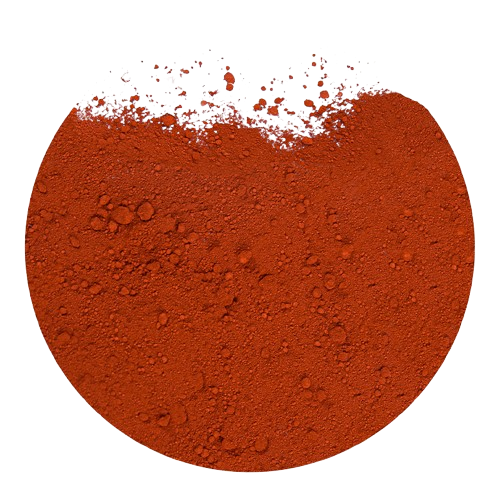
Iron Oxide Red
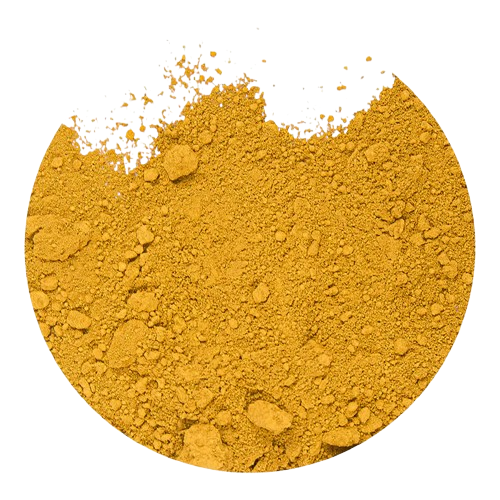
Iron Oxide Yellow
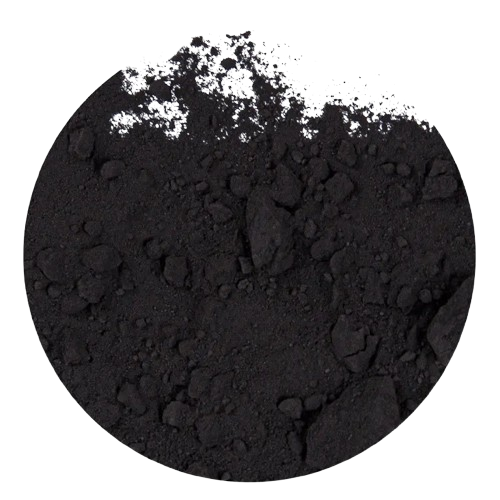
Iron Oxide Black
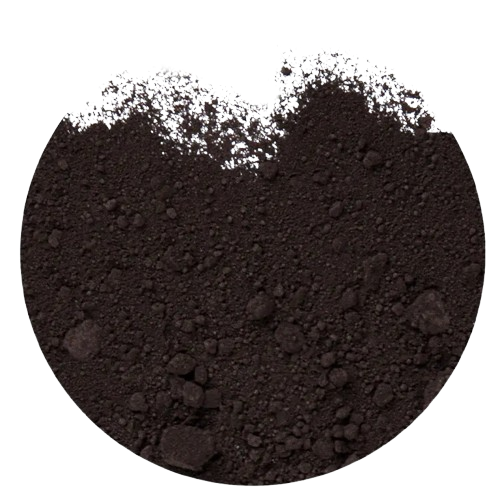
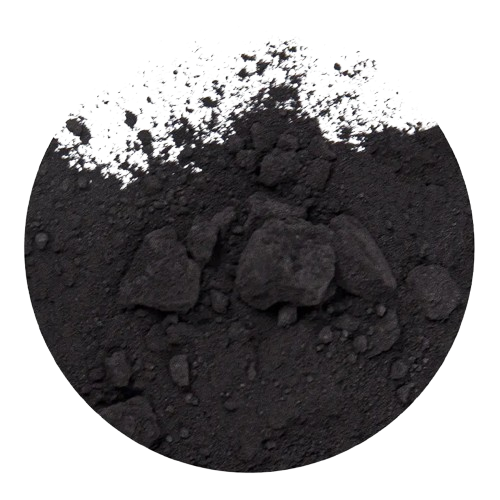
Iron Oxide Black
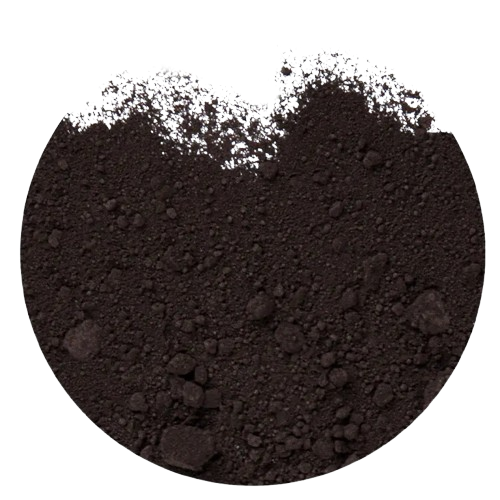
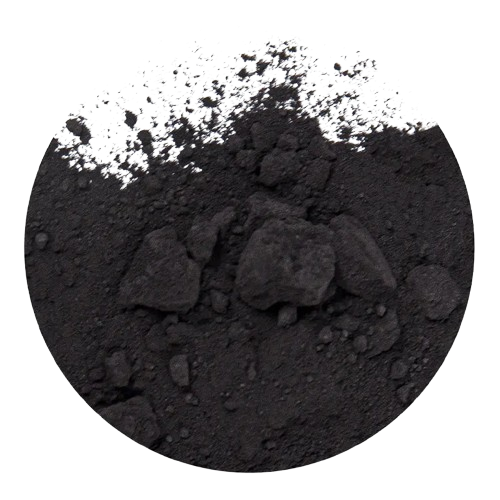
Short Description:
It is a commonly used magnetic material, and special pure ferric oxide is used as a raw material for recording tapes and telecommunication equipment, natural magnetite is a raw material for iron making, and is used to make primer and topcoat.
| Iron Oxide Black | ||||||||||
|---|---|---|---|---|---|---|---|---|---|---|
| Type | Fe2O3 (%) |
Oil Absorption (g/100g) |
Res. on 325 mesh (%) |
Water Sol .salts (%) |
Moisture (%) |
PH value | Density (g/cm) |
Particle Shape | Compared with std | Tinting Strength (%) |
| 740 | ≥93 | 15-25 | ≤0.4 | ≤0.5 | ≤1.0 | 5-8 | 0.8-1.2 | Spherical | ≤1 | 95-105 |
| 750 | ≥95 | 15-25 | ≤0.4 | ≤0.5 | ≤1.0 | 5-8 | 0.8-1.2 | Spherical | ≤1 | 95-105 |
| 723 | ≥92 | 15-25 | ≤0.4 | ≤0.5 | ≤1.0 | 5-8 | 0.8-1.2 | Spherical | ≤1 | 95-105 |
| 790 | ≥92 | 15-25 | ≤0.4 | ≤0.5 | ≤1.0 | 5-8 | 0.8-1.2 | Spherical | ≤1 | 95-105 |
| 9675 | 20-45 | ≤1.0 | ≤1.0 | ≤1.5 | 5-8 | 0.2-0.4 | Acicular | ≤1 | 110-130 | |
| Hs50 | 20-45 | ≤1.0 | ≤1.0 | ≤1.5 | 5-8 | 0.2-0.4 | Acicular | ≤1 | 110-130 | |
Black Oxide Powder
What Is Black Oxide Powder?
Iron Oxide Black Powder is an inorganic black pigment with the chemical formula Fe₃O₄ (CAS 1317-61-9), commonly referred to as Black Iron Oxide Fe3O4. It is produced through controlled precipitation or calcination processes, resulting in a fine, free-flowing powder with uniform particle size distribution and a stable spinel crystal structure.
Black Oxide Powder delivers strong tinting strength, consistent opacity, and reliable lightfastness — properties that make it suitable for demanding outdoor and industrial environments. Unlike organic black pigments, it contains no polycyclic aromatic hydrocarbons (PAHs), which positions it for compliance with international safety standards including the EU E172 food-grade classification.
The product line covers multiple grades — including Iron Oxide Black 318, Iron Oxide Black 330, and Iron Oxide Black 722 — each formulated to specific particle size ranges, surface area profiles, and end-use performance targets. Whether the application requires deep black color in concrete, corrosion-resistant industrial coatings, food-contact compliance, or ferrimagnetic functionality, a corresponding Black Iron Oxide Pigment grade is available.
Key Product Advantages
Chemical Stability
The Fe₃O₄ spinel structure resists acid/alkali attack, solvent migration, and heat deformation up to 300°C, maintaining color integrity throughout processing and service life.
Tinting Strength and Opacity
Iron Oxide Black Powder achieves deep, uniform black tones at low loading levels. Tinting strength indices range from 80% to 110% depending on grade.
Weatherfastness
Outdoor performance is sustained without hue shift, chalking, or fading under prolonged UV exposure — a requirement met by all grades of Iron Oxide Pigment Black.
Regulatory Compliance
Food- and pharma-grade batches meet EU Black Iron Oxide E172 specifications, with heavy metal content (As, Pb, Hg, Cd) controlled to levels approved by EFSA and FDA.
Multi-Grade Availability
Grades 318, 330, and 722 cover the full particle size spectrum from sub-0.3 µm to 1.0 µm, accommodating both fine-dispersion and high-loading applications.
Surface Treatment Options
Hydrophilic or hydrophobic surface treatment is available, enabling compatibility with both water-borne and solvent-borne systems.
Technical Specifications
The following table presents typical physicochemical parameters for Black Oxide Pigment Powder. Exact values vary by grade; certificates of analysis are available upon request.
| Parameter | Iron Oxide Black 318 | Iron Oxide Black 330 | Iron Oxide Black 722 |
|---|---|---|---|
| Fe₃O₄ Purity (%) | ≥ 96 | ≥ 95 | ≥ 94 |
| Particle Size D50 (µm) | 0.1 – 0.3 | 0.3 – 0.6 | 0.6 – 1.0 |
| BET Surface Area (m²/g) | 15 – 20 | 8 – 15 | 6 – 10 |
| Tinting Strength (%) | 100 – 110 | 90 – 100 | 80 – 90 |
| Oil Absorption (g/100g) | 25 – 30 | 18 – 25 | 15 – 20 |
| pH (10% slurry) | 6.5 – 7.5 | 6.0 – 8.0 | 6.0 – 8.0 |
| Heat Resistance (°C) | ≤ 300 | ≤ 300 | ≤ 280 |
| Moisture Content (%) | ≤ 1.0 | ≤ 1.5 | ≤ 1.5 |
Typical values for Black Oxide Powder grades 318, 330, and 722. All data subject to batch variation; refer to Certificate of Analysis for confirmed values.
Application Areas
Construction
Black Oxide Pigment Powder is extensively used to color cement concrete, colored asphalt, paving tiles, artificial stone, and precast elements. Typical dosage ranges from 0.5% to 5% by dry weight. Its strong alkali resistance ensures color stability within the high-pH environment of cementitious systems, where many organic pigments would degrade.
Coatings
Iron Oxide Pigment Black is incorporated into anticorrosion primers, marine coatings, industrial topcoats, and architectural paints. Compared to carbon black, it disperses more uniformly, exhibits lower tendency to flocculate, and contributes mild rust-inhibiting properties through its iron oxide chemistry. Both Iron Oxide Black 318 (fine grades for color depth) and Iron Oxide Black 330 (balanced dispersion) are used depending on formulation requirements.
Plastics and Rubber
Black Iron Oxide Pigment performs reliably in polyolefins, PVC, ABS, and rubber compounds. Iron Oxide Black 722, with its larger particle size and lower oil absorption, is particularly suited to high-loading plastic and asphalt applications where cost efficiency is a factor. Thermal stability up to 280–300°C accommodates most standard injection molding and extrusion processes.
Food and Pharma E172
Black Iron Oxide E172 is approved by the European Food Safety Authority (EFSA) and is listed in EU Regulation (EC) No 1333/2008 as a permitted food coloring for specific applications such as olive surface coloring. In pharmaceuticals, it is used in tablet coatings and capsule printing inks. In cosmetics, Black Oxide Pigment appears in eye shadow, eyeliner, mascara, and nail color formulations, subject to EU Cosmetics Regulation (EC) No 1223/2009 and FDA 21 CFR compliance. Heavy metal limits — As ≤ 3 ppm, Pb ≤ 10 ppm, Hg ≤ 1 ppm — must be confirmed per applicable market regulations.
Magnetic Materials
The ferrimagnetic nature of Black Iron Oxide Fe3O4 enables its use in magnetic recording media, ferrite core premix, electromagnetic shielding coatings, and ferrofluid formulations. Specific surface area and particle size distribution are critical parameters for these applications; Iron Oxide Black 318 with its fine particle size and high BET surface area is typically selected for functional magnetic uses.
Grade Selection Guide
Selecting the appropriate Black Oxide Pigment grade depends primarily on particle size requirements, dispersion system type, loading level, and end-use performance criteria. The following guide outlines the typical selection logic:
Iron Oxide Black 318
Sub-0.3 µm particle size, highest tinting strength index (100–110%). Suited to applications requiring deep black intensity at low pigment loading — including high-performance coatings, color pastes, cosmetics, and magnetic functional materials.
Iron Oxide Black 330
Mid-range D50 (0.3–0.6 µm), balanced tinting strength and dispersion. The most widely specified grade for construction coloring, general-purpose paints, and industrial pigment dispersions.
Iron Oxide Black 722
Coarser particle size (0.6–1.0 µm), lower oil absorption, reduced cost per unit volume. Suited to asphalt, high-fill plastic compounds, and applications where tinting strength requirements are secondary to flow and loading efficiency.
Frequently Asked Questions
Why does Black Oxide Powder settle in water-borne coatings?
Sedimentation in aqueous systems is typically related to insufficient surface hydrophilicity or inadequate dispersion. Specifying a hydrophilic surface-treated grade of Iron Oxide Black Powder, combined with a polycarboxylate dispersant and grinding to a fineness of ≤ 20 µm (Hegman 6+), substantially improves settling resistance and shelf stability.
What causes grey undertone in concrete colored with Iron Oxide Black?
Grey undertone usually results from three factors: low pigment loading, high water-to-cement ratio diluting color development, or efflorescence (alkali migration to the surface). Using Iron Oxide Black 318 — the finer and higher-tinting-strength grade — at a dosage of ≥ 2% by cement weight, while controlling curing conditions to minimize free alkali movement, produces a more consistent deep black finish.
How is E172 compliance verified for food and pharmaceutical applications?
Black Iron Oxide E172 compliance is verified through batch-specific third-party test reports (SGS, Intertek, Bureau Veritas) confirming identity (Fe₃O₄ ≥ 94%), heavy metal content (As, Pb, Hg, Cd, Cr), water-soluble matter, and particle size. Suppliers should provide a Technical Data Sheet (TDS), Safety Data Sheet (SDS), and a Declaration of Conformity referencing the relevant EU or USP/NF monograph. Confirm that the product batch is manufactured under food-grade GMP conditions and is not simply a repackaged industrial-grade material.
How does Iron Oxide Black compare to carbon black in coatings?
Iron Oxide Pigment Black and carbon black both produce black colorations but differ significantly in performance profile. Carbon black typically delivers a deeper jetness (lower L* value) at very low loading levels (0.1–0.5%), but requires more intensive dispersion energy and is prone to flocculation in certain resin systems. Black Oxide Pigment is easier to disperse, provides greater formulation stability, contributes some anticorrosive function, and is available in food/cosmetic-compliant grades — capabilities that carbon black does not offer. For applications where absolute jetness is the sole criterion and cost is critical, carbon black may be selected; for industrial protection, building materials, or regulated industries, Iron Oxide Black Powder is generally the specified choice.
What are the storage and handling requirements?
Black Iron Oxide Pigment should be stored in sealed containers in a dry, ventilated environment below 40°C, away from moisture sources. Prolonged exposure to humidity can cause caking, which increases dispersion difficulty without affecting chemical properties. The product is classified as a non-hazardous solid under international transport regulations (not subject to IMDG, IATA DGR, or ADR restrictions). Standard moisture-proof packaging (paper bags with PE liner, or jumbo bags with inner PE film) is recommended for bulk shipments.
Packaging and Available Formats
Iron Oxide Black Powder is available in the following packaging configurations to accommodate laboratory sampling through full production-scale procurement:
- 25 kg net paper bags (PE inner liner) — standard industrial packaging
- 500 kg / 1,000 kg jumbo bags (FIBC) — bulk shipment option
- 1 kg / 5 kg sample quantities — available for qualification testing
- Custom packaging configurations available upon request for E172-grade batches requiring dedicated food-contact compliant materials
Deep Black Color · Industrial Durability · Global Compliance
Iron Oxide Red Color Chart
Full Shade & Reduction (1:10)
Amaco Ltd Chemical & Pigment Distributer In Saudia
AMA Co. Ltd. focuses on the distribution and supply of high-quality inorganic iron oxide pigments in Saudi Arabia. We are a trusted distributor of iron oxide powder, supplying reliable pigment solutions for various industrial applications. Our pigments cover iron oxide red, yellow, black, brown, green, orange, blue, etc.
AMA Co. Ltd. works closely with established manufacturers to provide high-performance and high-stability composite iron oxide pigments in three series: standard, micronized, and low heavy metal content levels.
we are not only focuses on reliable product supply and customer service, but also is committed to maintaining product quality, supporting safe operations, protecting the environment, and building long-term relationships with our customers.
We are committed to providing dependable iron oxide pigment solutions and professional distribution services to customers across Saudi Arabia.

Industry knowledge
Iron Oxide Powder Manufacturer with a Full Color Range
Deqing Demi Pigment Technology Co., Ltd. (Demei) is a professional manufacturer of synthetic inorganic iron oxide pigments. Our product line covers iron oxide red, yellow, black, brown, orange, green, and blue, supplied in three controlled series: standard, micronized, and low heavy metal content. We serve coatings, construction, plastics, ceramics, and other demanding industries from our production base in Zhejiang, China.
As a Iron Oxide Powder Manufacturers, we combine chemical synthesis with precise milling and surface treatment to deliver consistent color strength, dispersion, and weatherfastness. Our trade company, Deqing Hele New Material Technology Co., Ltd., manages export logistics and documentation for global projects.
Product Range and Application Fit
Each color family is engineered for specific binder systems and end-use conditions. The table below summarizes our available pigment types and their primary applications.
| Pigment Type | Chemical Form | Typical Applications | Key Grades |
|---|---|---|---|
| Iron Oxide Red | Fe₂O₃ | Concrete, coatings, plastics, ceramics | 110, 130, 190, 180 |
| Iron Oxide Yellow | FeO(OH) | Cement products, paints, rubber | 313, 920, 810 |
| Iron Oxide Black | Fe₃O₄ | Concrete, anticorrosion coatings, plastics, food-contact | 318, 330, 722, 740 |
| Iron Oxide Brown | Composite oxides | Architectural concrete, floor coatings | 610, 686 |
| Iron Oxide Orange | Fe₂O₃ | Cement tiles, paints, plastics | 960 |
| Iron Oxide Green | Composite | Camouflage coatings, concrete coloring | 5607, 835 |
| Iron Oxide Blue | Composite | Coatings, plastics, artistic concrete | 2040, 5605 |
For detailed specifications, visit our Iron Oxide Red, Iron Oxide Yellow, and Custom Black Oxide Powder Manufacturers pages.
Three Series for Different Compliance and Performance Needs
We supply the same color family in three product series, allowing you to match the pigment grade to your regulatory and processing environment.
- Standard series – General-purpose grades for construction materials, industrial coatings, and rubber. Optimized for cost-effective coloring with reliable batch-to-batch consistency.
- Micronized series – Ultra-fine particle size distribution for faster dispersion, higher gloss, and improved color development in high-end paints and inks. Suitable for automated dosing systems.
- Low heavy metal series – Controlled levels of lead, arsenic, cadmium, and mercury, meeting strict international safety standards for food-contact, cosmetics, and children's products.
Engineering Value and Quality Control
Our pigments are produced through controlled precipitation and calcination, ensuring high chemical purity and uniform crystal structure. We monitor key parameters such as Fe₂O₃ content, oil absorption, residue on 325 mesh, water-soluble salts, moisture, pH, and tinting strength. For example, our iron oxide red grades maintain Fe₂O₃ content above 95%, with tinting strength between 95% and 105% of standard.
As a factory, we implement standardized production protocols to minimize lot-to-lot variation. Each batch is tested before release, and certificates of analysis are available for every shipment. Our quality system aligns with ISO 9001:2025, and products are designed to meet REACH and other applicable regulations.
Configuration and Customization
We offer several configuration options to fit your formulation and handling requirements:
- Particle size – Choose from standard, fine, or micronized grades to control dispersion speed and final surface finish.
- Surface treatment – Hydrophilic or hydrophobic treatments improve compatibility with water-borne or solvent-borne systems.
- Composite pigments – Pre-blended colors for specific shades (e.g., brown, green, orange) reduce weighing errors and ensure uniformity in concrete or coatings.
- Packaging – Available in 25 kg paper bags with plastic lining, water-soluble bags, low-melting PE bags, or 500–1250 kg jumbo bags.
Automation Integration and Process Support
For manufacturers using automated batching systems, we provide technical data on bulk density, flowability, and dispersibility to support accurate dosing. Our micronized series is designed to disperse quickly in high-speed mixers, reducing cycle times. We can also supply pre-dispersed pigment pastes for liquid colorant systems upon request.
During installation or trial runs, our technical team assists with dosage optimization, dispersion parameters, and troubleshooting. We recommend conducting a small-scale test with your actual binder before full production.
Maintenance, Storage, and Serviceability
Iron oxide pigments are chemically stable, but proper storage is essential to maintain performance. Store in a dry, ventilated area with relative humidity below 60%. Keep bags sealed until use to prevent moisture absorption and agglomeration. Under these conditions, our pigments have a practical shelf life of five to ten years.
We provide handling guidelines and safety data sheets with every order. For ongoing supply, our trade company coordinates logistics and documentation, ensuring timely delivery to your port or warehouse.
Information We Use to Configure Your Solution
To prepare a precise quotation and product recommendation, we need the following project details:
| Project Parameter | Why It Matters |
|---|---|
| Application (e.g., concrete, paint, plastic) | Determines required alkali resistance, heat stability, and dispersion method. |
| Target color and shade reference | Helps select the correct pigment type and composite blend. |
| Binder system (water-based, solvent-based, cement) | Influences surface treatment and dispersibility requirements. |
| Regulatory compliance (e.g., E172, FDA) | Specifies the low heavy metal series or food-grade certification needed. |
| Production volume and batch size | Affects packaging choice and supply chain planning. |
| Processing equipment (mixer type, temperature) | Allows us to recommend micronized grades for faster dispersion or standard grades for high loading. |
Frequently Asked Questions
What is the difference between standard, micronized, and low heavy metal series?
Standard series offers reliable performance for general industrial use. Micronized series has finer particles for faster dispersion and higher gloss. Low heavy metal series meets strict safety limits for food-contact, cosmetics, and toys.
Can you provide custom composite colors?
Yes, we produce composite iron oxide pigments for specific shades like brown, green, and orange. Our lab can match your reference color with a Delta E of less than 1.0, ensuring batch-to-batch consistency.
What is the typical shelf life of your iron oxide powder?
In sealed, dry storage, our pigments remain usable for five to ten years. The chemical structure is stable, but moisture can cause agglomeration, so keep bags closed.
Do you provide certificates of analysis?
Yes, each shipment includes a COA with detailed parameters such as Fe₂O₃ content, tinting strength, moisture, and heavy metal levels. We can also provide REACH and other compliance documents upon request.
Can you supply small trial samples before bulk order?
We offer sample packs for testing. Please provide your application details and target shade so we can recommend the most suitable grade.
Amacoltd
Professional Chemical & Pigment Distributor
Products
Iron Oxide Brown
Iron Oxide Orange
Iron Oxide Blue
- admin@amacoltd.co
- Office No:304 Building No:4629 King Saud street 6876 Al mazruiyah Dist. 32414
Copyright © 2026 Amacoltd